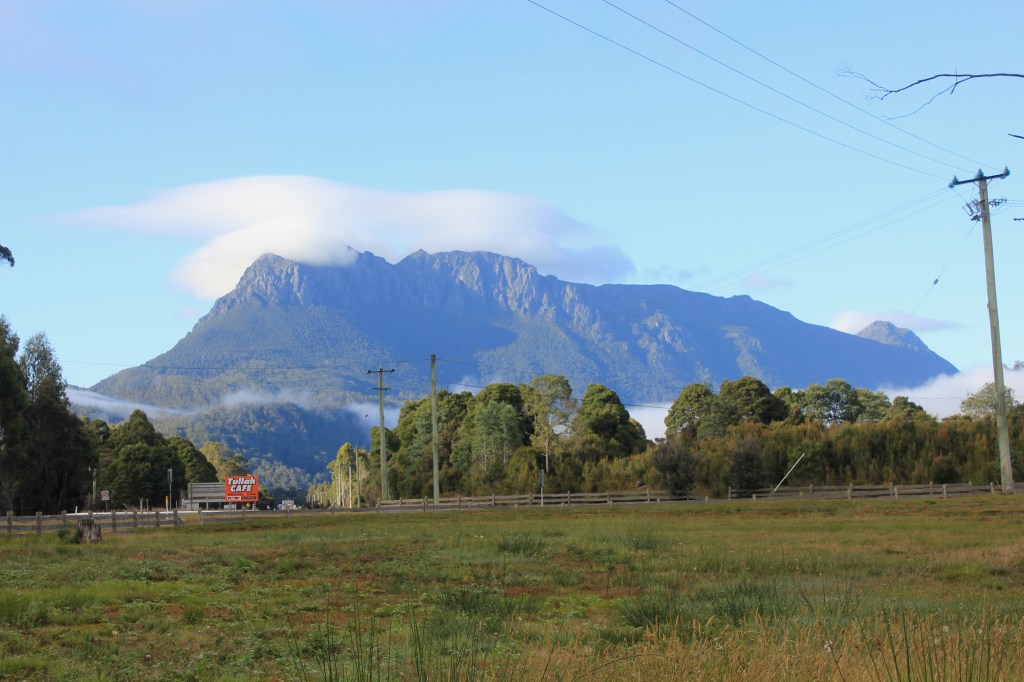
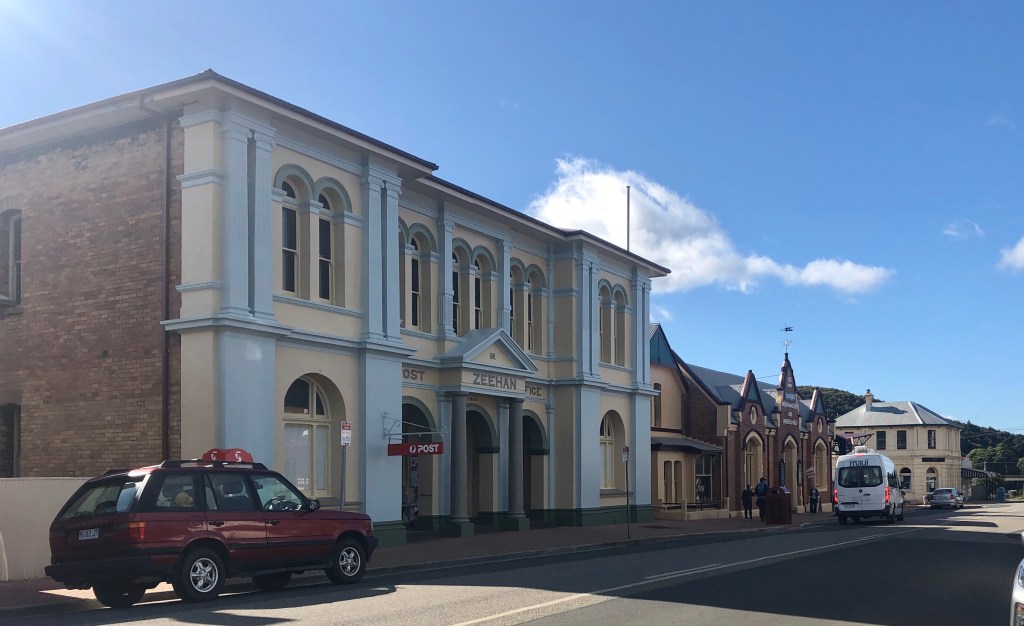
Tullah is cold in the morning, no walks today, the diesel heater is on full and it’s about 8am that we venture out of bed. Our destination today, Strahan, (Straw’n) jewel of the west coast, some 90klm south and a bit west of us. We have planned our only stop in Zeehan, which was once a thriving mining town for silver, lead and tin. In fact Zeehan was called the “Silver City” and remnants of its glory remain today in the imposing brick buildings scattered through the main street. At one time Zeehan was the third largest town in Tasmania, alas things have changed. Strolling around town we visited a Second Hand shop where an elderly lady in attendance gave Roscoe a hard time about trying to hurry Evi along, she was really sweet though. (We did buy a warm jumper and shirt).
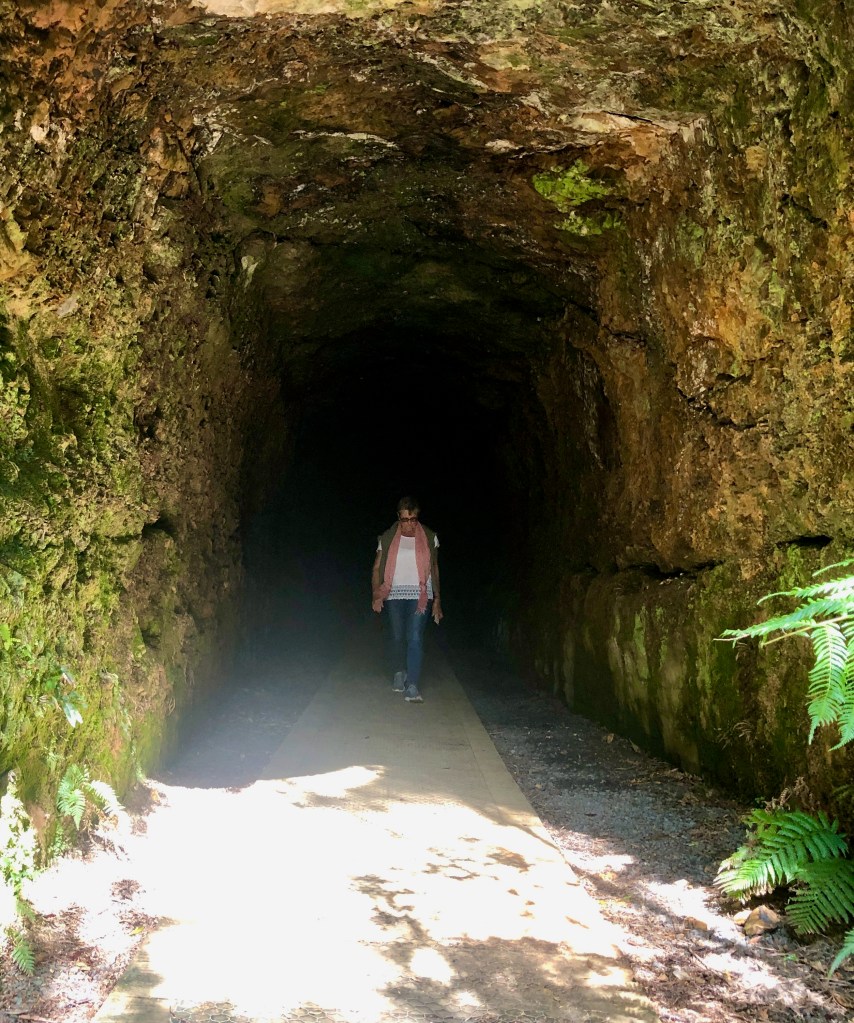
Next we drove out to Zeehan Golf Club nestled in the hills nearby, here we parked the rigs and both couples began a “short walk”, according to Evi, to the “Spray Tunnel”. We walked, and walked, and walked up a gravel winding road, then down, then up and down again having been assured that we couldn’t drive in and turn around….wrong! At the end of the “short walk”, about an hour and a half to get there, was a large carpark and a turning area you could have turned a semi-trailer in! Good on ya Evil! The Spray Tunnel is a 3 metre high, 2.2 metre wide and 100 metre long small train tunnel used to get miners in and or out of these hills. “Spray”….no idea, but we did it! Out the other side of the tunnel is a well used path that seemed to head more directly to the Golf Club, then we found a “shortcut” down a steepish path that later ended at a flooded path through some marshes. Taking our hiking boots off we carefully trod through the freezing water up to our knees. Got the circulation going!
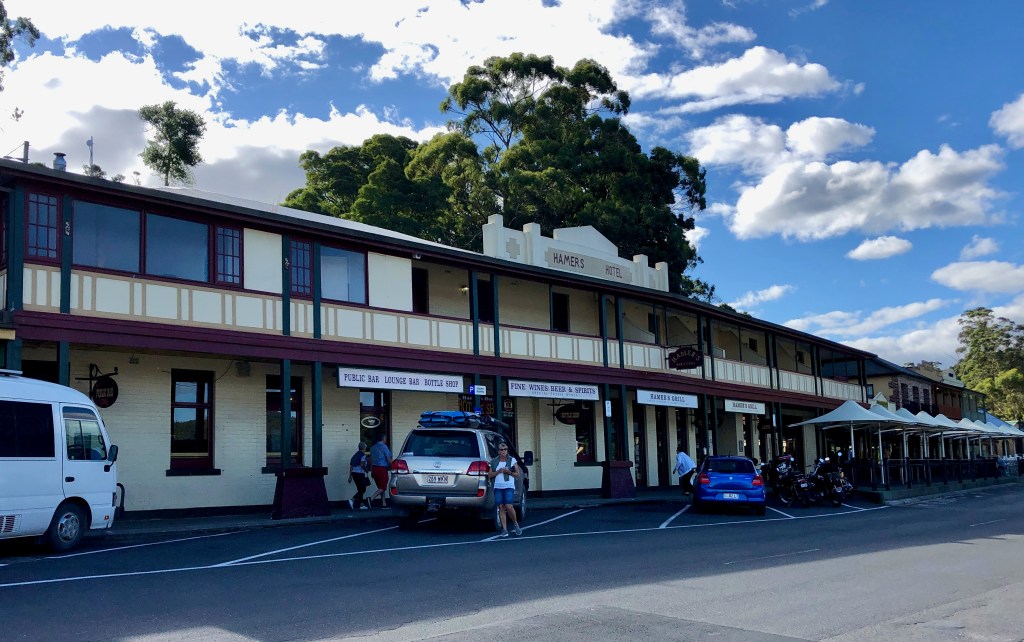
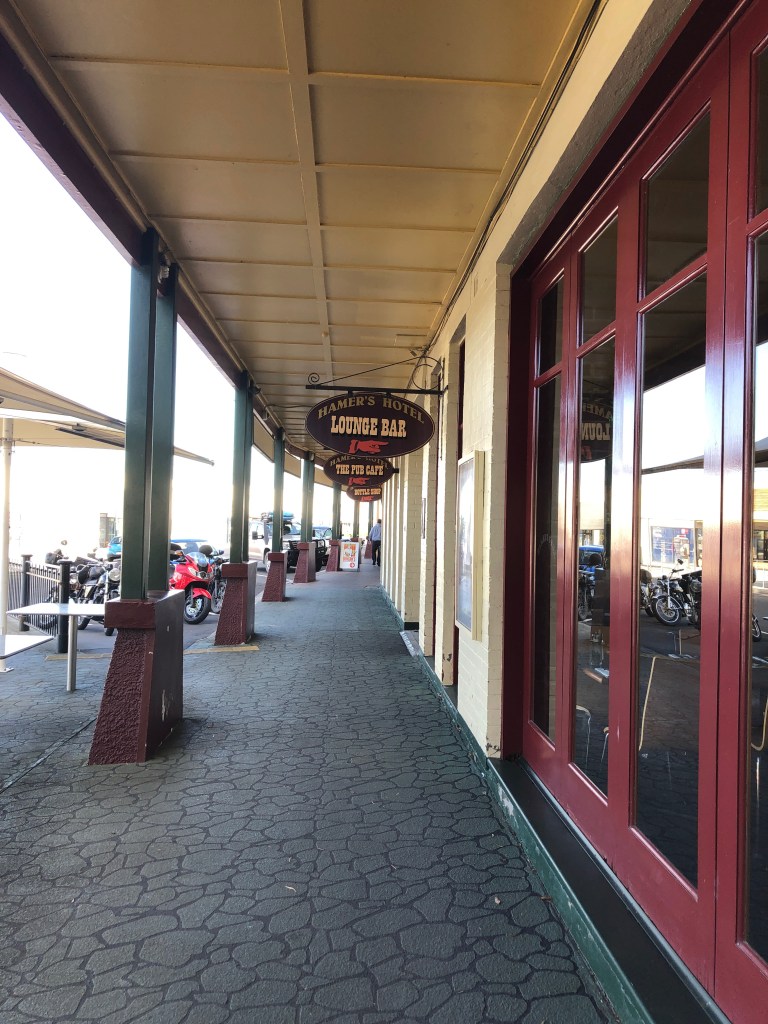
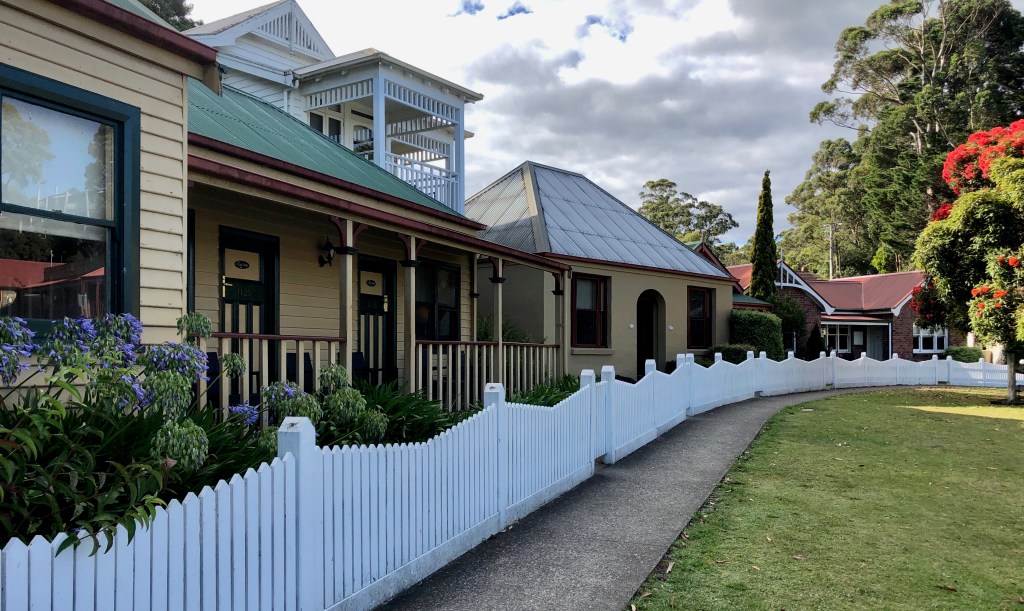
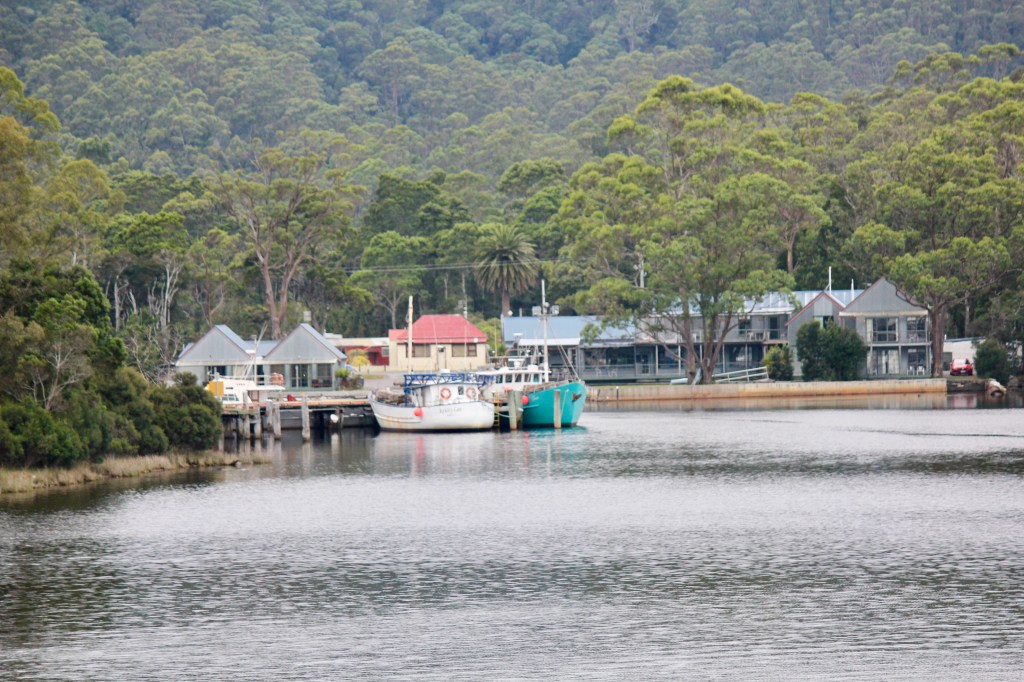
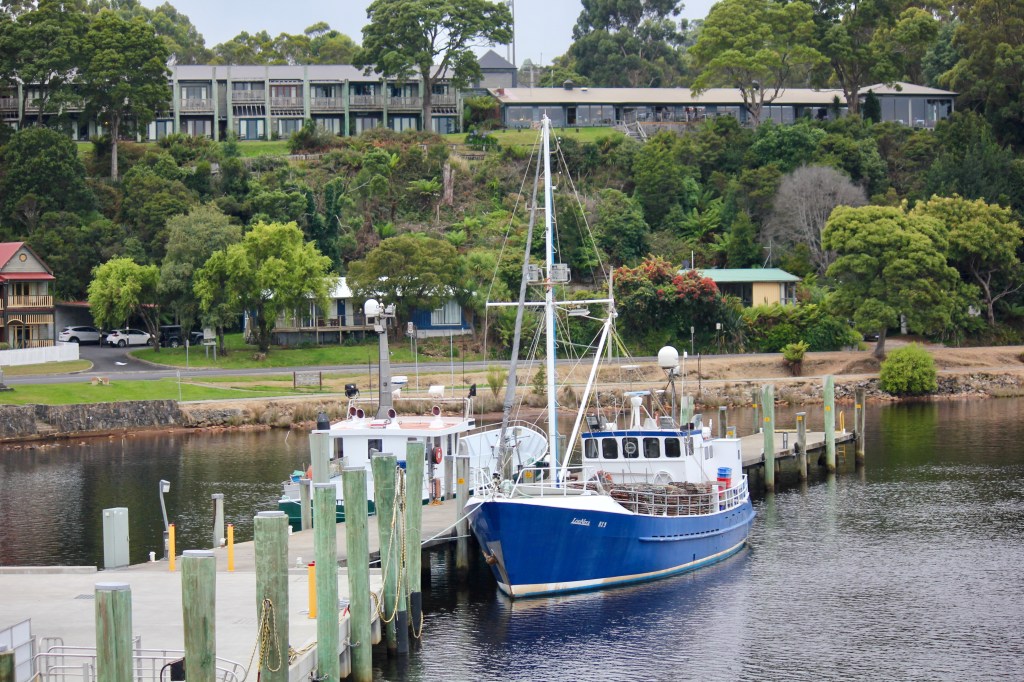
Next stop, Strahan where we went against all habits and had booked ahead at the Strahan Beach Tourist Park…that’s us, touristas! The park is sort of on a beach facing south down the huge expanse of Macquarie Harbour. What was originally a port for the mining and timber industry is now a tourist mecca and fishing village. For tourism, Strahan is the gateway to the Heritage listed South West Wilderness of the Gordon and Franklin Rivers. An afternoon excursion into the town centre and we reckon it’s lovely. For a start the camp is an easy walk or bike ride to the town which consists of a long main street facing an equally long dock and harbour. Obviously the day cruise boats are the main game in town and there is a large modern building along the wharf housing their booking offices and shops. At the western end of the wharfs is a large Tourist Info office and a small outdoor auditorium. Along the inland side of the road is a really long old hotel running into some shops then AirBnB houses and apartments. In all, it’s a quaint tourist village.
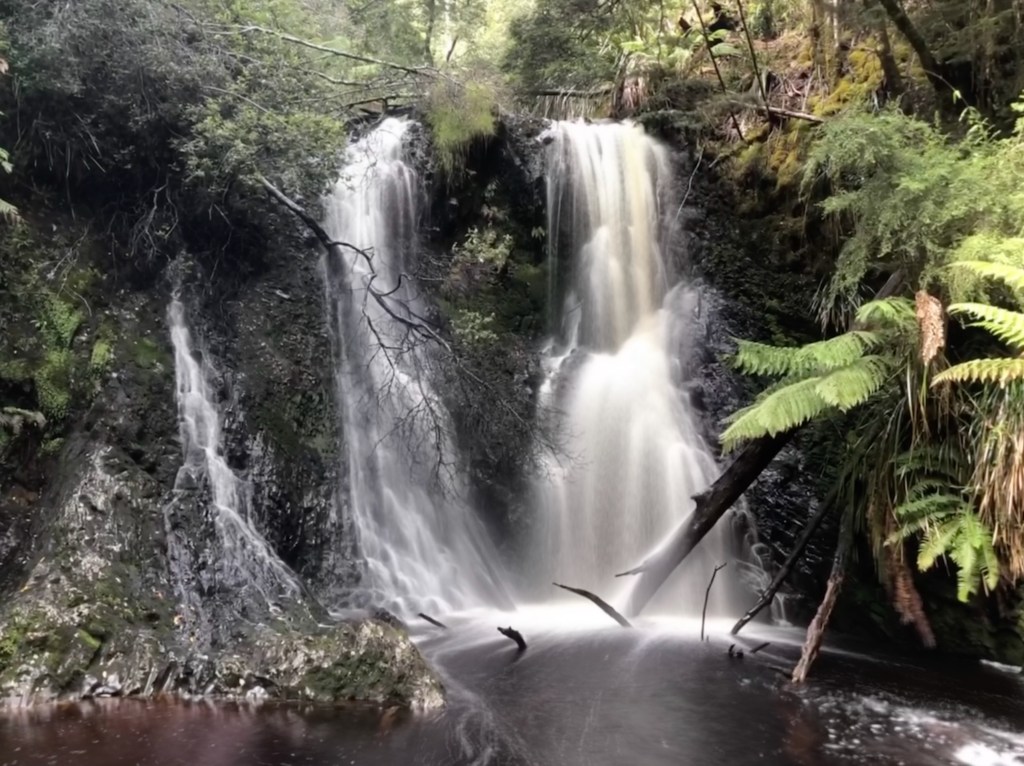
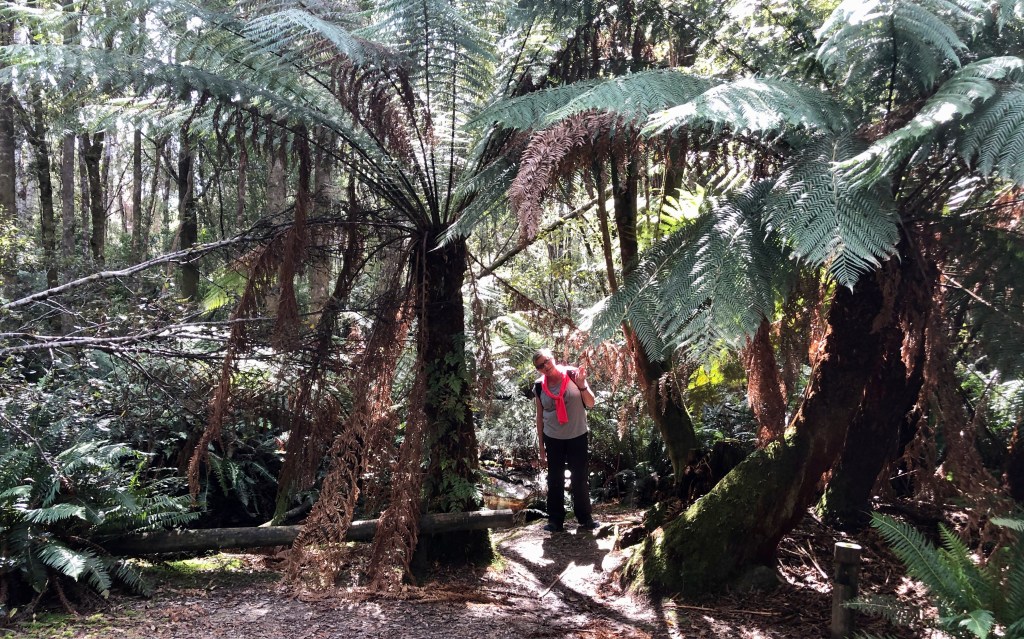
We booked seats on the Gordon River Cruise, the Red Boat, for Wednesday, so that leaves us Tuesday to explore the Botanical Garden Reserve, something Evi said is a must do. We pack a light lunch into our backpacks and ride our pushbikes the few kilometres through town to the park. The walk from the park is on a wide well prepared gravel path for most of the track, with the occasional clearing by a crystal clear bubbling Botanical Creek as we make our way to our target, Hogarth Falls. It is a truly beautiful park with huge trees and fern lined pathway. Near the end we climb a little then down a slippery staircase to the base of the falls and rock-pool. The place is so relaxing, and we are never in a hurry anyway. By the time we return to our bikes in the carpark it is lunchtime so we sit in a picnic hut for a while.
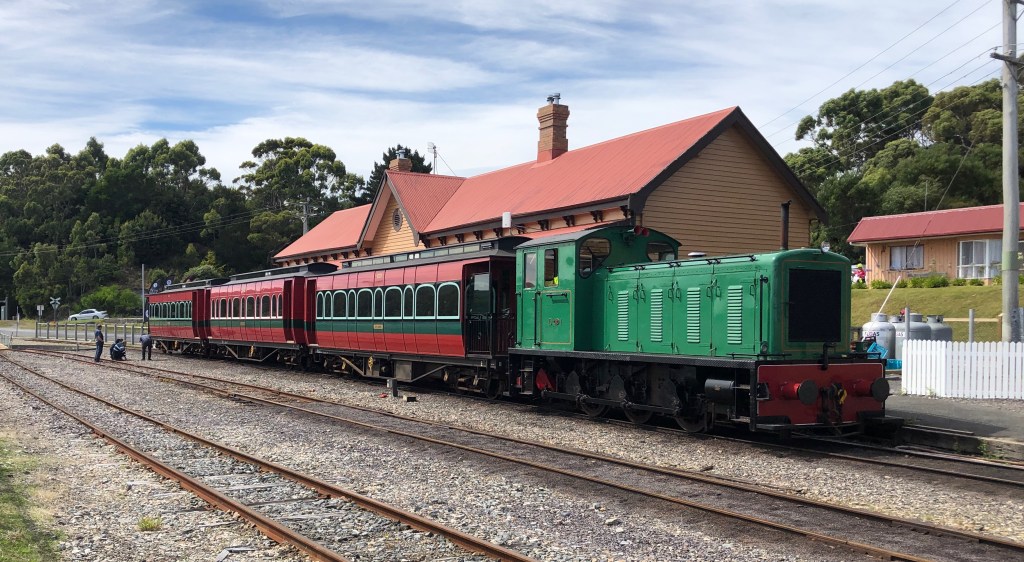
At the far end of the waterfront road in Strahan, past the Botanical Garden, is the old railway station and train that now serves as the other main tourist activity, a train journey, full or half day, to Queenstown some 50klm east and high above. After our walk we continue our ride to have a look at the old train and consider our options. The train wends it’s way and climbs over hills, gullies, horseshoe turns and is considered most spectacular. We decide to probably go on Thursday, however, this never occurs as it is on Thursday that the CoVid lockdown suddenly hits Tasmania.
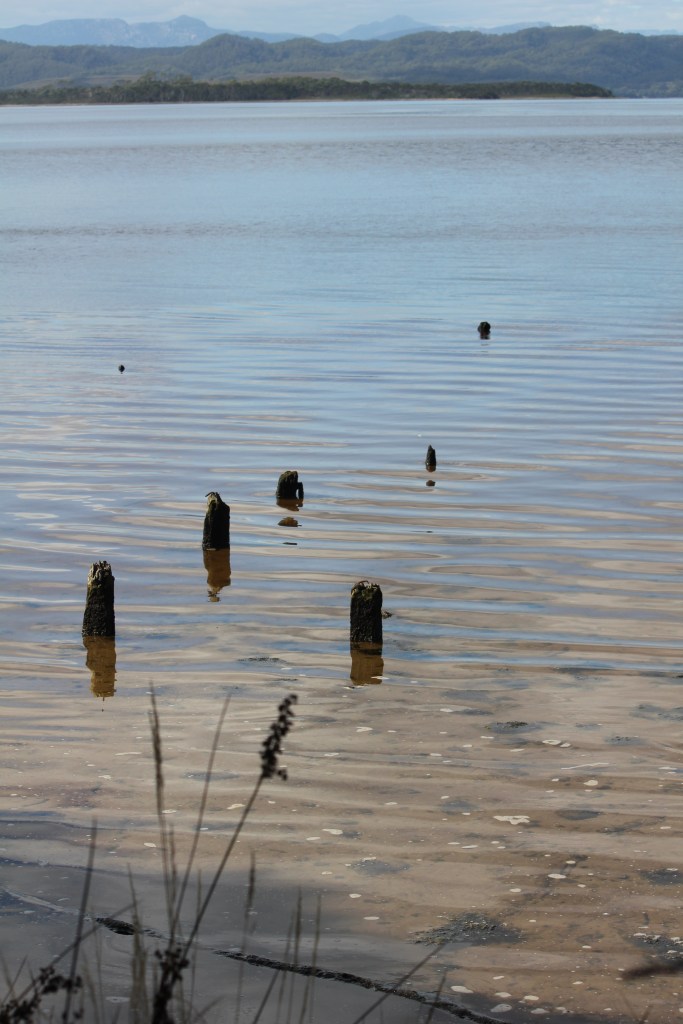
With an hour to spare in the afternoon we take a drive to Macquarie Point, south west of town, and the most southerly place you can drive to on the west coast. Macquarie juts out on a long peninsula to a narrow channel choke pointcalled Macquarie Heads bordered on the south by a rugged series of points culminating in Cape Sorell and Surging Point, gotta love geography! The drive seems to go forever, and the coastline is hidden by scrub most of the way, though we do detour down rough tracks from time to time to discover small campsites and tiny beaches, all inaccessible for our rig. We soon lose interest and head home for happy hour!
8:30am and the Red Boat is boarding, and by the crowd it looks pretty full. There are three classes of tickets and seats onboard, and naturally we have gone for the “Gold Class”, on the top deck (covered), by an expansive window, with lunch included and very close to the bar! The cruise is about 6 hours so we sit back in our comfortable recliner seats and watch the vast Macquarie harbour unfold. Our first cruise destination is Macquarie Heads and the very narrow strait, the only entrance to this body of water. At its narrowest the channel, called Hell’s Gate, is no more than 100 metres wide and the tide literally surges through the choke, hence Surge Point is the last finger of land fronting the Indian Ocean, or more precisely the Southern Ocean.
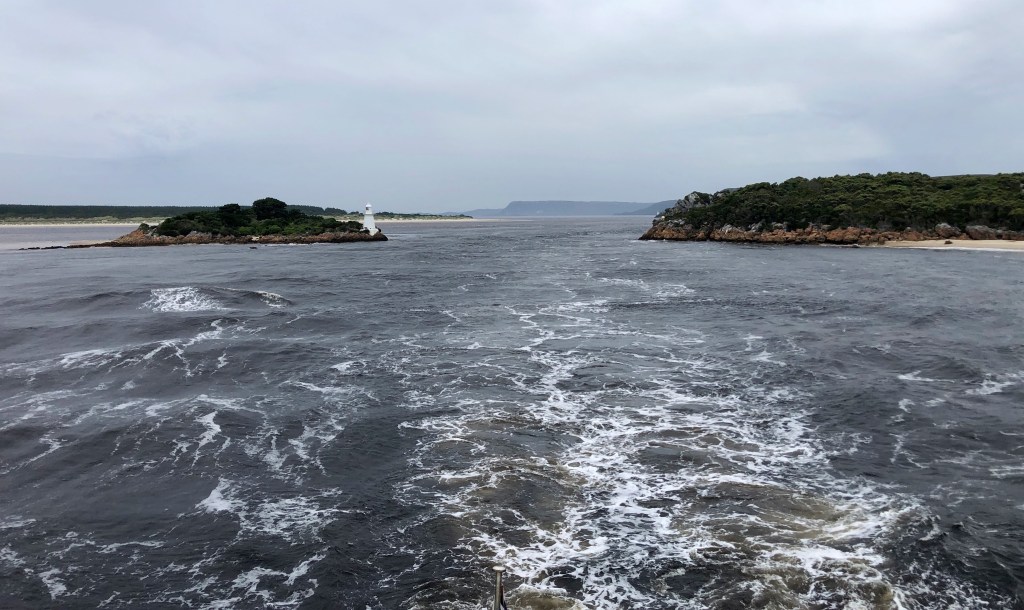
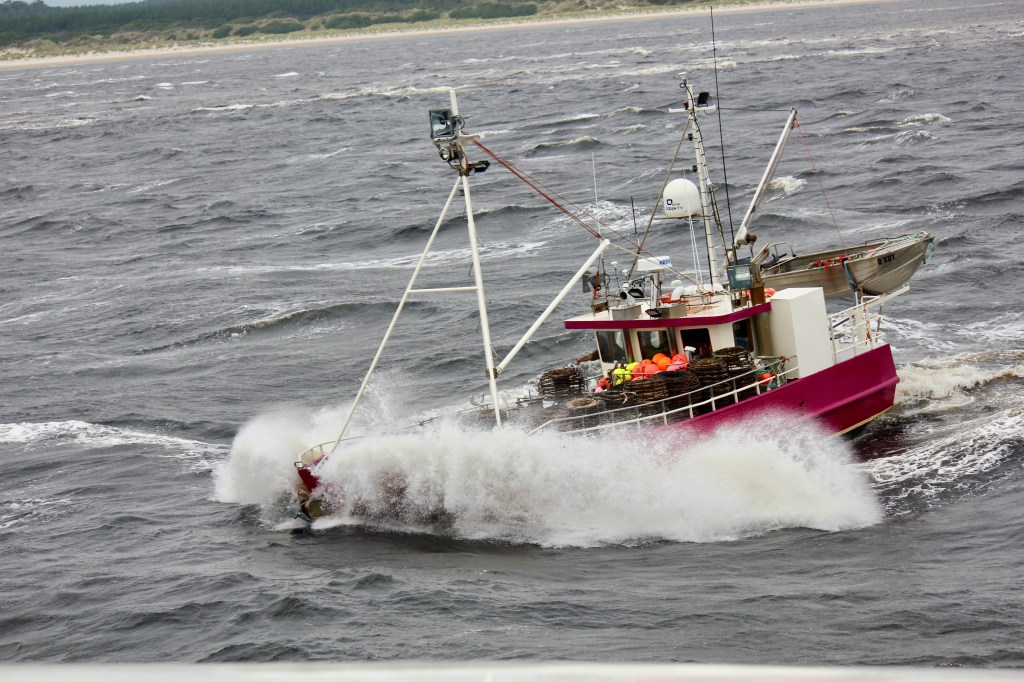
We had passed through Hell’s Gate against the tide and you can feel the pressure against the boat. Turning just inside Surge Point and there is a local fishing boat heading out and now we can see the real power of the current as the boats bow rises and falls. Just inside the Strait and the Skipper points out a long, narrow line of rocks parallel to the channel that was built during 1900 to 1902 to check the water flow and keep the channel open. Today it would be a difficult task, back then it must have been long backbreaking work.
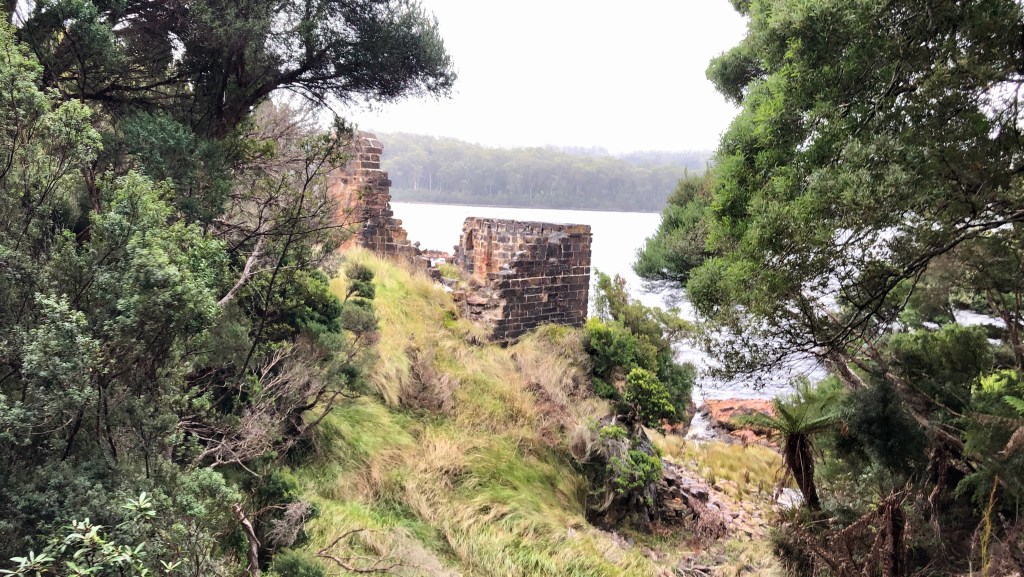
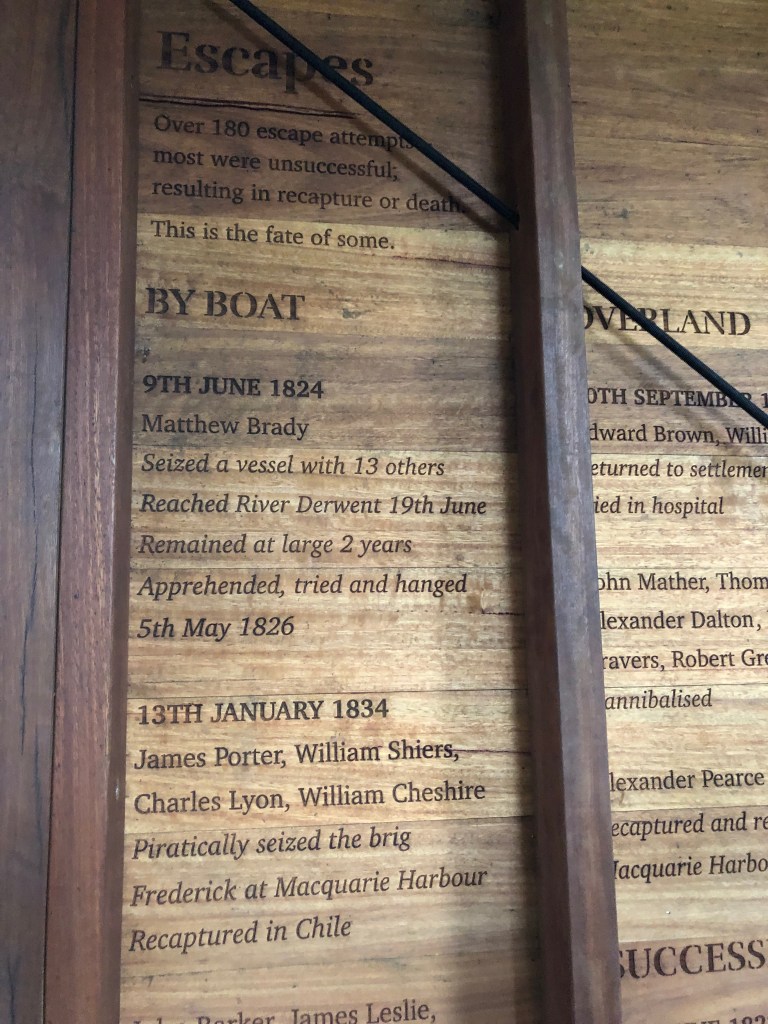
Now back in calmer waters we plot a course south west towards Sarah Island, but first we slow for a photo opportunity beside a fish farm with numerous very large Salmon pens, probably more than twenty. In the midst is a punt shooting a high stream of water mixed with food pellets. Full steam ahead to Sarah Island, surrounded by very cold water and exposed to the worst weather in Australia began life as a very hard convict settlement, and one where escape meant a long swim in the freezing water, braving the sharks and, if you survived to get to land an almost impossible mountainous overland journey of weeks with no food or track lay ahead, and you’re still stuck on this large island.
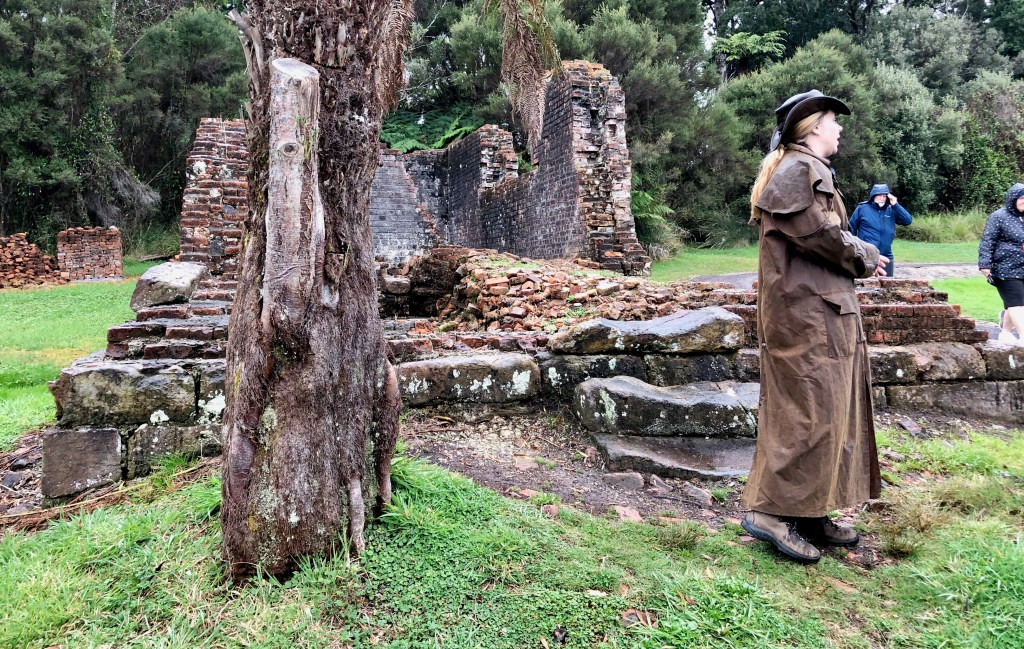
On Sarah Island we are split into groups lead by a local Park Ranger with great knowledge of the islands long and hard history. Sarah Island was established in 1821, and our visit, with the wind blowing from the west, the Roaring Forties no less, frequent cold showers of rain and a chill not easy to hold off with our warm coats and raincoats really makes you wonder at the conditions the men endured here in this most remote penal compound in Van Diemen’s Land. Stories recounted by the Rangers and written on the many notices around this small island speak only of toil, hardship, foul weather, punishments, sickness and death. Only the worst of the worst convicts were sent here, especially if they had escaped from another compound.
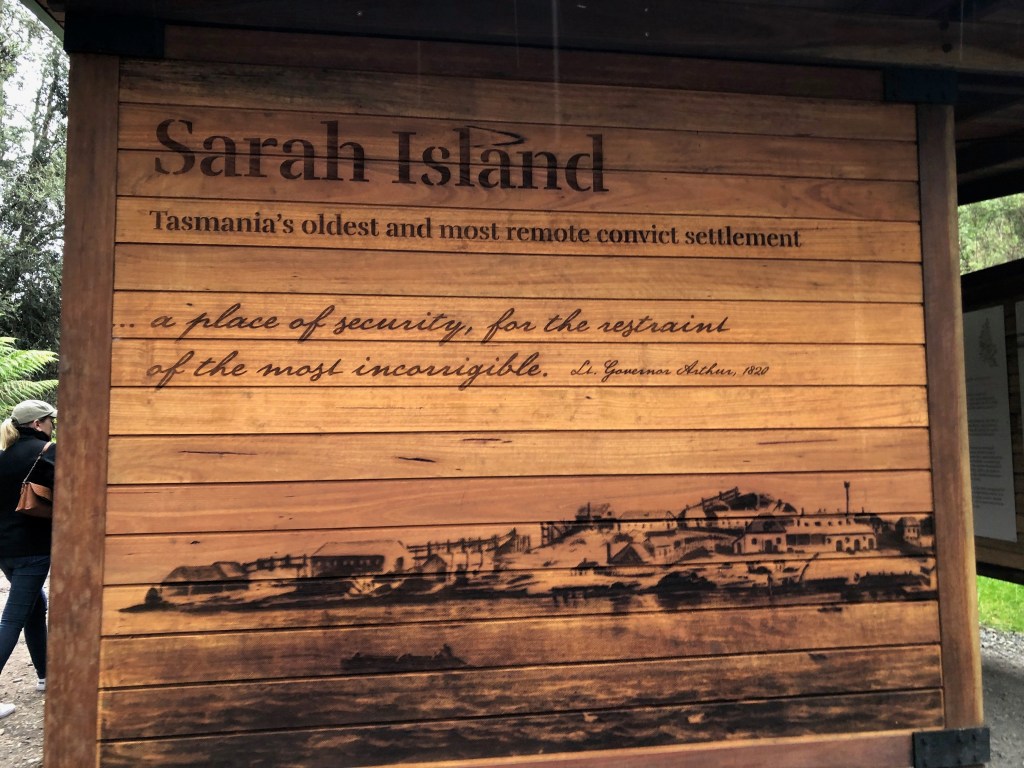
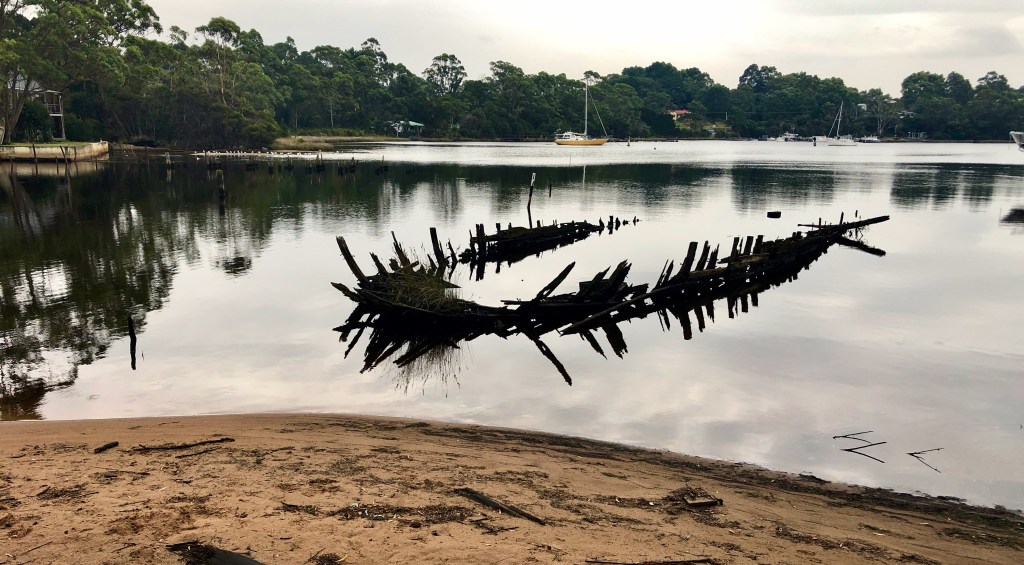
The colony was made financially viable through the cutting of Huon Pine, the finest timber for boat construction in the world. A boat building enterprise was also initiated training and using the convicts and for a time Sarah Island became to most prolific operation in Australia. Some escapes were surprisingly successful, but often ended in re-capture in the more populated east coast area. The most notable occurred when ten men stole an unfinished Brig called the Fredrick, and they managed to sail it to Chile. This episode has become a long playing stage production here in Strahan (see below) and also an excellent book by Adam Courtenay very worthwhile reading.
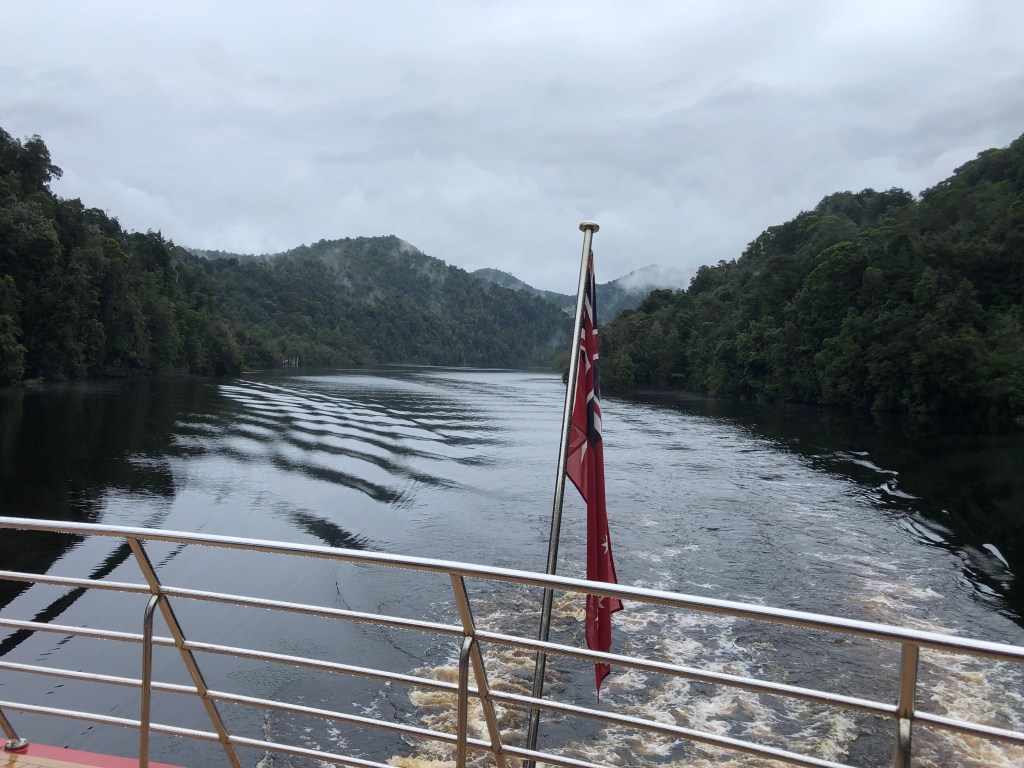
Now heading east we come to the mouth of the Gordon River, made famous by the 1980’s conservationists protests and blockade of the river during the governments proposed damming of the Franklin and Gordon River wilderness area. A dam was constructed on the upper reaches of the Franklin, however, the rest of this marvellous wild landscape was soon declared a Heritage Wilderness thus stopping dams and forestry. Once in the embrace of the river which flows like a giant serpent through hills pregnant with foliage, we find ourselves cutting across mirror-like water, and at a much reduced speed to protect the banks. We travel such, serenely, for probably 40 minutes before we turn then call ashore to a wharf with a looped boardwalk through a large gully in the hillside. It is ancient, serene despite the other passengers, just a pleasure to walk and gawk.
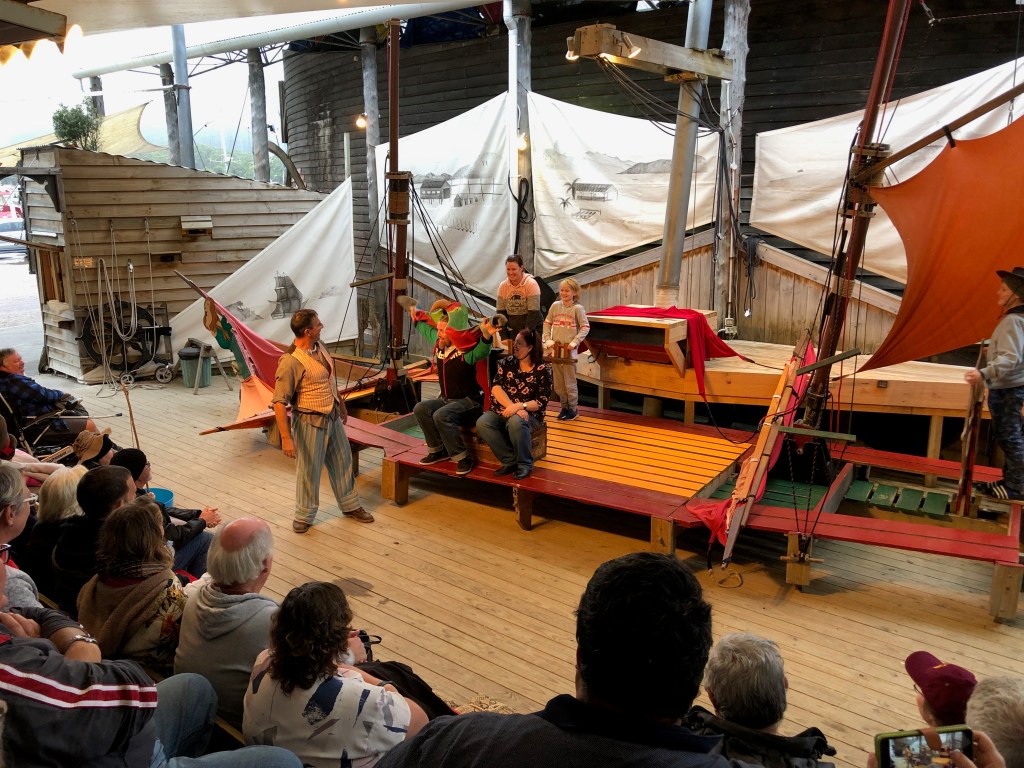
Back on shore we head back to the camp, a quick dinner and we head back to Strahan wharf and the outdoor theatre, we have tickets with Gary and Jenny for the show, “The Boat That Never Was”. This is a story about Sarah Island and the escape on the Frederick, except the Frederick was never registered, therefore when the British Royale Navy eventually tracked down some of the escapees in Chile, they were able to deny that they stole the Frederick, and were freed! The show is amazing as it has a cast of two, but audience participation both onstage and in your seat is compulsory. It is the funniest 90 minutes you can imagine, a great tale told with great wit.
At show’s end we learn that for both the cruise boats, train and this show, the curtain has fallen. As of tomorrow there is a Tasmanian lockdown stopping all entertainment and attractions due to social distancing. Sadly for Gary and Jenny they were booked on the Red Boat the next morning, something they were very sorry to miss. We still had another day booked at the camp, and so we watched as the holiday makers departed en-mass leaving our 2 vans with hardly another site taken. CoVid-19 will now have a large affect on our Tasmanian Odyssey.

 Australia. Dust, Fire, Flood & Pandemic